








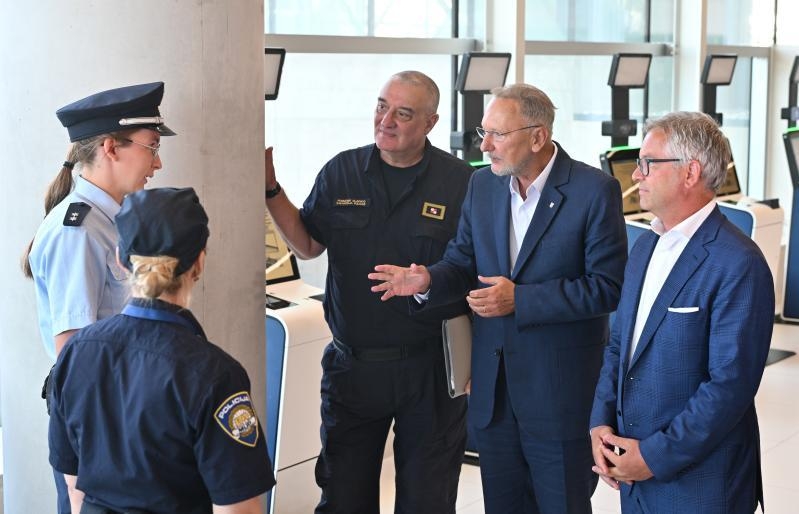
Executives, delegates and journalists who travel to Europe for meetings now cross a fully digital border. The European Union’s Entry/Exit System (EES) has been fully operational at all external border crossing points of the participating countries since April 10, 2026. It replaces passport stamps with an electronic record of each entry and exit. A second scheme, the European Travel Information and Authorisation System (ETIAS), is still not in operation, and the EU has not set a start date.
Who the Entry/Exit System covers
The EES applies to non-EU nationals traveling for a short stay, defined as up to 90 days in any 180-day period. It covers both travelers who need a short-stay visa and those who do not. The system is used by 29 European countries: the EU member states except Cyprus and Ireland, plus Iceland, Liechtenstein, Norway and Switzerland. The 180-day period is calculated as a single period across all of them. In Cyprus and Ireland, passports are still stamped by hand.
The system was rolled out gradually over six months, a phase that ended on April 9, 2026. During that phase, biometric data may not have been collected at every crossing point.
What happens at the border
On the first crossing since the system started, passport control officers take a photo of the traveler’s face and/or scan their fingerprints, and the data is recorded in a digital file. The passport is not stamped. Travelers can speed this up by registering some data in advance at self-service equipment or through a mobile app where the country of arrival or departure provides one. They will still meet a passport control officer.
Travelers who do not need a visa have four fingerprints and a facial image stored. Visa holders have only a facial image stored, since their fingerprints were taken when they applied for the visa. Fingerprints of children under 12 are currently not scanned.
On later trips, officers only verify the stored fingerprints and photo. Holders of a biometric passport, which contains a chip, can use self-service systems where available. If their file is clear, they will usually not need to see an officer. Travelers without a biometric passport cannot use self-service.
ETIAS: not yet
ETIAS will be a travel authorization for visa-exempt travelers entering 30 European countries. According to the EU’s official ETIAS website, the system is not in operation and no applications are being collected. The EU says it will announce the start date several months before launch. Once it starts, travelers will apply online, pay a 20 euro fee and be able to stay for up to 90 days.
Until that date is announced, there is no ETIAS application to make.







