








The World Trade Organization has raised its forecast for world merchandise trade. In its Global Trade Outlook and Statistics, released on October 8, 2026, the WTO now expects the volume of goods trade to grow 3.9% in 2026, up from the 1.9% it projected in March. It expects growth of 4.1% in 2027.
The upgrade matters for companies and trade officials heading into the year-end summit season, because the gains are concentrated in a narrow set of products and regions. The WTO says those gains will be uneven, and its services forecast moved in the opposite direction.
AI-related goods drive the numbers
According to the WTO, AI-enabling goods such as semiconductors and servers accounted for 47% of the growth in world merchandise trade, measured in value terms, in the first half of 2026. They made up 14.8% of world merchandise trade in that period. Trade in these goods rose 67% year on year. Goods trade volume overall grew 3.5% in the first half.
The WTO links the outlook to investment in AI infrastructure. Citing market projections, it says global spending on AI infrastructure is expected to rise by at least 30% in 2026 and by a further 10% to 20% in 2027. Director-General Ngozi Okonjo-Iweala said the numbers reflect “trade resilience in action,” while noting that not everyone can access opportunities such as AI.
Services slow and regions diverge
The WTO cut its forecast for commercial services trade volume to 3.3% in 2026, from 4.8% in March. It expects services growth of 6.4% in 2027. Travel is one weak spot. The WTO reports that travelers’ spending abroad rose 5% year on year in the second quarter, down from 15% in the first quarter.
The regional picture is wide. The WTO projects 2026 merchandise export growth of 9.9% for Asia, 5.7% for North America and 5.6% for Africa. It projects 3.4% for South America, a 0.1% decline for Europe, a 3.9% decline for the Commonwealth of Independent States and a 17.2% fall for the Middle East.
On the import side, the WTO expects growth of 9.5% in Asia, 8.9% in Africa and 1.4% in North America, and a 15.4% decline in the Middle East. For services exports, it expects Europe to account for more than half of global growth this year.
The Middle East conflict and energy trade
The WTO expects the Middle East conflict to weigh on trade in 2026 through higher energy prices, disrupted transport routes and lower travel demand. In the first half of the year, Middle East crude oil exports fell about 24% and liquefied natural gas exports fell 47%, according to the report. Global crude oil exports declined about 6%.
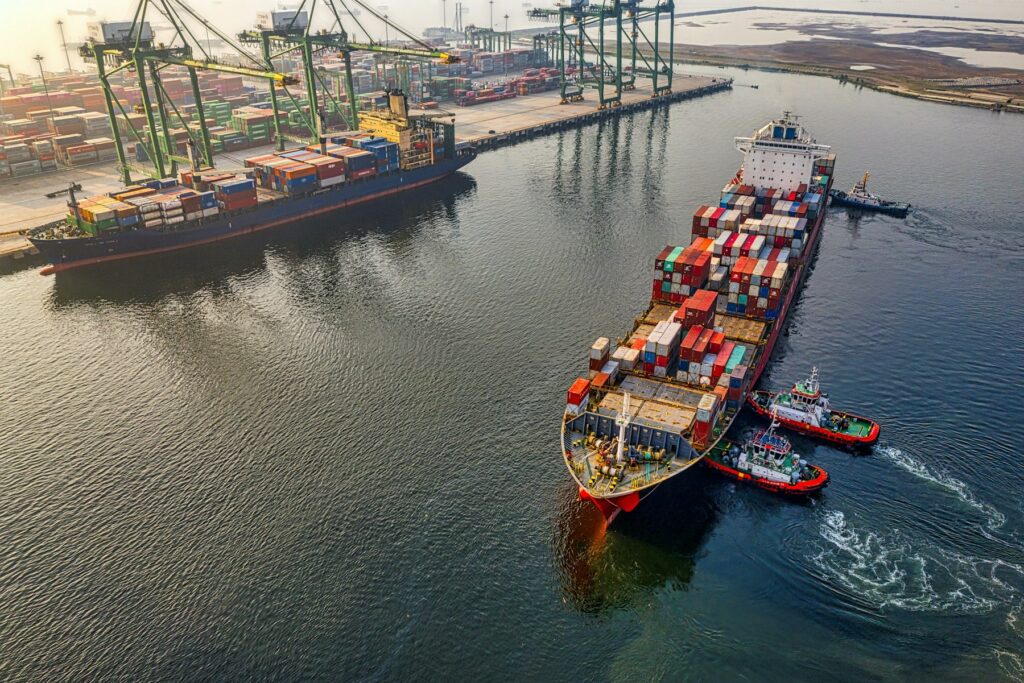
Shipping has held up so far. Global container throughput rose 3.9% in the year to July, the WTO says. The organization also projects world GDP growth of 2.6% in 2026 and 2.9% in 2027.
For readers following trade talks at the G20, APEC and other forums, the outlook offers two clear markers: goods trade is stronger than expected earlier this year, and the gains depend heavily on one technology cycle and on a few exporting regions.







