









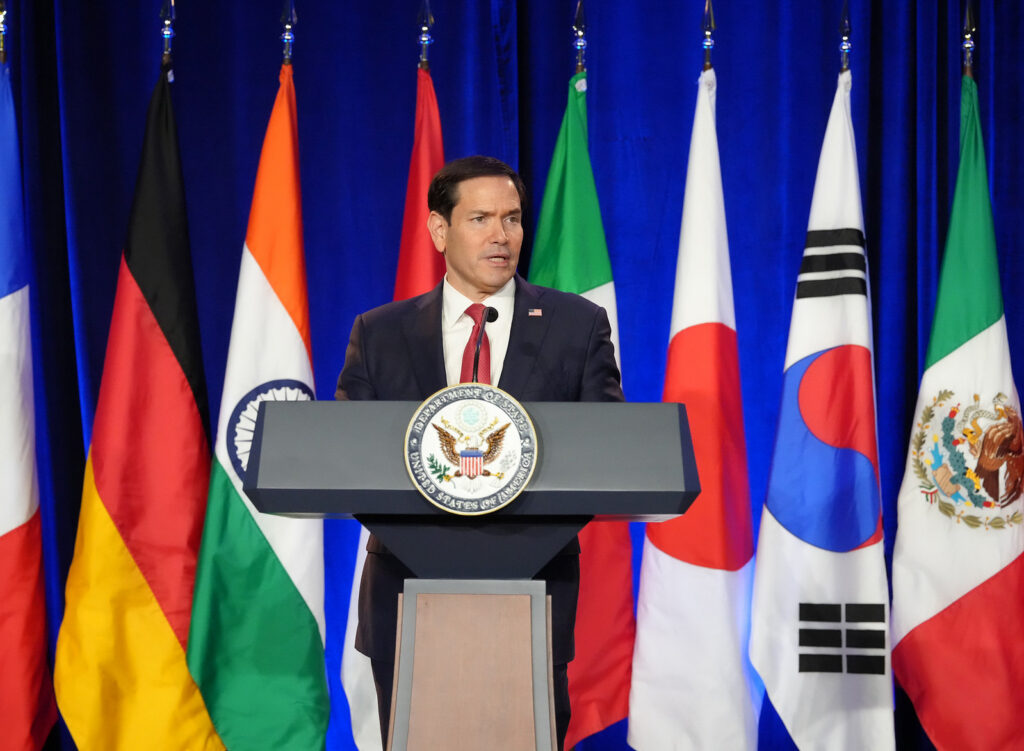
Exchanging gifts is a long-standing courtesy when foreign delegations meet U.S. officials, and the weeks before the G20 Leaders’ Summit in Miami on December 14 and 15 bring many such meetings. For U.S. federal employees, accepting those gifts is regulated by law. Since January 1, 2026, the “minimal value” threshold that decides whether a recipient may keep a gift from a foreign government is $525, up from $480.
For delegations, embassies and their advisers planning courtesy gifts, the figure is the practical line between a souvenir the recipient can keep and an item that becomes the property of the United States.
Why the number changed
The General Services Administration (GSA), in consultation with the State Department, must redefine the minimal value every three years to reflect changes in the Consumer Price Index. In a notice published in the Federal Register on January 2, 2026, GSA said consumer prices rose 8.99 percent over the preceding three years, an increase of $43.15 on the $480 level set in 2023. Following past practice, it rounded to the nearest five dollars, giving $525.
The new value applies to gifts and decorations received on or after January 1, 2026. Individual agencies may set a lower limit for their own employees by regulation.
What the law allows
The rules come from the Foreign Gifts and Decorations Act, codified at 5 U.S.C. 7342. Congress consents to a federal employee accepting and keeping a gift of minimal value offered as a souvenir or mark of courtesy.
An employee may also accept a gift worth more than minimal value when refusing it would likely cause offense or embarrassment or otherwise harm U.S. foreign relations. In that case, a tangible gift is treated as accepted on behalf of the United States and becomes U.S. property. Within 60 days, the employee must deposit it with their agency, either for disposal or, with the agency’s approval, for official use. GSA handles the disposal of items that agencies do not need.
The law treats travel differently. An employee may accept travel or travel expenses of more than minimal value, such as transportation, food and lodging, for travel taking place entirely outside the United States, if the employing agency permits it and it is consistent with U.S. interests.
A public record of gifts
Each agency must compile the statements its employees file on gifts above minimal value and send them to the Secretary of State. The State Department’s Office of the Chief of Protocol then publishes a comprehensive listing in the Federal Register.
The most recent listing, published on January 29, 2026, covers gifts reported for calendar year 2024, when the threshold was $480. It includes both tangible gifts and gifts of travel, and it counts all gifts given on a single occasion together when their combined value exceeds the limit. Gifts received at this year’s summits and ministerial meetings would appear in future listings.
Sources
- Federal Register (GSA): Revision to Foreign Gifts and Decorations Minimal Value (January 2, 2026)
- Federal Register (Department of State): Office of the Chief of Protocol; Gifts to Federal Employees From Foreign Government Sources Reported to Employing Agencies in Calendar Year 2024 (January 29, 2026)
- 5 U.S.C. 7342: Receipt and disposition of foreign gifts and decorations
- U.S. Department of State: Media Logistics for the G20 Leaders’ Summit in Miami, Florida (October 28, 2026)







