





Group of Nations SUMMITSSolutions Through Inclusivityby Group of Nations

Publisher of the first-ever G7 Summit publication, Denver 1997

See where your company fits

A question for your company

Which analysis on this page could your company add a solution to?

Share your answer over a virtual coffee & a chat →
An Official Publication of America250. Declaring Freedom: the founders and the birth of a nation. Order your copy at shop.groupofnations.com An Official Publication of America250. Icons of the Open Road: Route 66 and landmarks from all 50 states. Order your copy at shop.groupofnations.com An Official Publication of America250. Gridiron Evolution: America’s game, from Canton to the world. Order your copy at shop.groupofnations.com An Official Publication of America250. To the Moon and Beyond: America’s space legacy. Order your copy at shop.groupofnations.com
Official America250 Commemorative Posters in Full Color, Old Style and Black & White, 18 x 24 in. Order at shop.groupofnations.com
With congratulations on America’s 250th Anniversary, from JMI-IBNF, PEACE and the Global Alliance CouncilAdvertisement
Group of Nations supports Birmingham Care Group as its charity of choice. Donate now at birminghamcaregroup.org

Analysis · Homes · Factory-built housing

New U.S. housing law puts factory-built homes in focus as completions fall

The 21st Century ROAD to Housing Act rewrites the definition of a manufactured home, but most of the work now falls to HUD, the states and appropriators.

November 10, 2026 · 3 min read

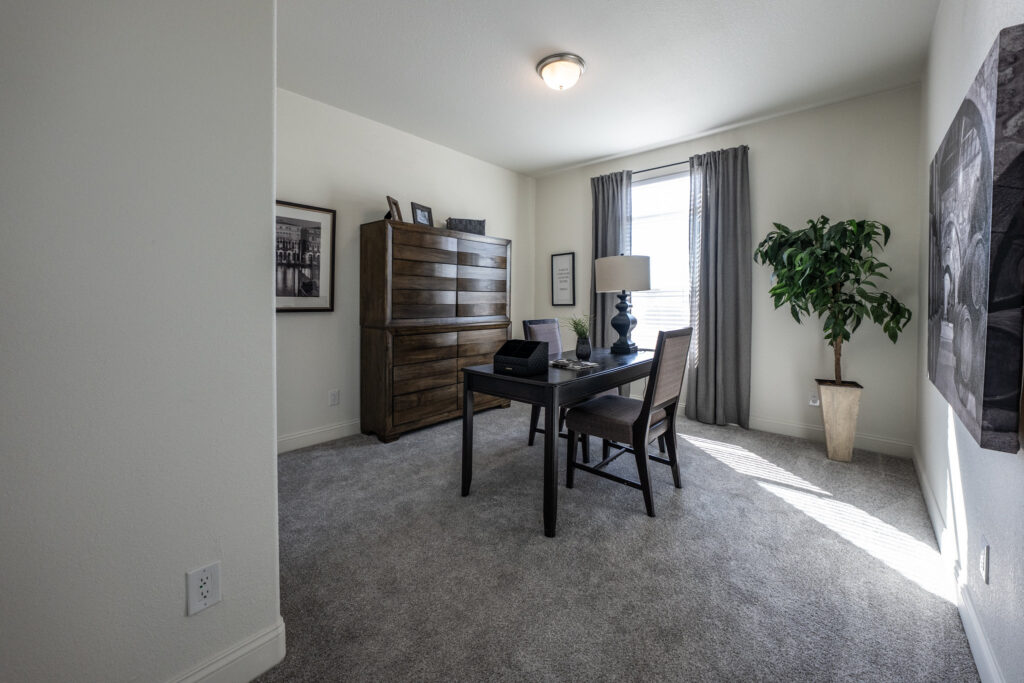
Furnished room inside a home displayed during a HUD tour of a Champion Homes manufacturing facility in Phoenix, Arizona
U.S. Department of Housing and Urban Development, October 2026. Public domain.

A sweeping U.S. housing law is moving from Congress to the agencies, and factory-built homes are near the center of it. The 21st Century ROAD to Housing Act became law on July 11, 2026. A Congressional Research Service report published October 20 lays out what it does and when. For builders, lenders and investors, the law could change what a factory can produce and how it is financed.

The law arrives with construction under pressure. The Census Bureau and HUD reported a seasonally adjusted annual rate of 1,221,000 housing starts in September. That is 7.4 percent below September 2025, though the bureau’s margin of error means that decline is not statistically conclusive. Completions came in at a rate of 1,192,000, which is 14.0 percent below a year earlier. Building permits were at 1,400,000, or 3.0 percent lower.

What changes for manufactured homes

Manufactured homes are built in factories under a national code administered by HUD. Until now, federal law required them to be built on a permanent steel chassis. CRS notes that some argued the rule was outdated because most of these homes are never moved after installation.

Section 301 of the law allows a manufactured home to be built with or without a permanent chassis. CRS says this may reduce some costs and could allow more designs, such as basements or multiple stories. HUD must issue revised standards, including a label distinguishing the two types. States must certify by July 11, 2027, or two years after enactment if their legislatures meet biennially, that their laws treat both types the same. HUD must also adopt minimum energy efficiency standards for manufactured homes by July 11, 2027.

HUD had already moved in this direction. On June 12, it proposed a rule allowing upper floor sections to be transported and built without a permanent chassis. The agency says more than 20 million Americans live in manufactured homes.

Modular homes and financing

Modular homes are also made in factories but follow state and local building codes. Their costs tend to come earlier in a project than those of site-built homes, which can clash with traditional construction loan schedules. Section 302 directs HUD to review barriers in Federal Housing Administration construction programs and report by July 11, 2027. HUD must then begin a rulemaking on alternative loan draw schedules.

The law also directs HUD to issue guidance on single-stair apartment buildings of up to six stories, a design that supporters say cuts costs. The National Fire Protection Association and others have cautioned that two stairwells remain necessary for fire safety.

The limits of the law

CRS cautions that many provisions are not self-implementing. The law appropriates no funding for any section, and some directives may go unfulfilled without new money. The next steps to watch are HUD’s revised standards and state certifications.


Sources

Source: www.congress.gov

Would you be against a virtual coffee & a chat? A cup of coffee framed by G7, G20, APEC and COP
Chris Atkins
Chris AtkinsPresident & Founder, Group of Nations

Would you be against a virtual coffee & a chat to see where your company fits?

Schedule your virtual coffee →

Click the image to order your virtual coffee & a chat. Pick a time that suits you; the video link comes with your calendar invitation.

More on Home Building in the 21st Century

Home Building in the 21st Century page →

Read by ministers and government officials, delegations, embassies, CEOs and NGOs

We explain what was decided. Your company can show business leaders, delegations and NGOs how it gets done.

Clients that have shared their solutions

SamsungMastercardDeutsche BankPfizerBMW
Would you be against a virtual coffee & a chat to see where your company fits?
Front cover: The Advocacy Advantage by Chris Atkins

Free book · by Chris Atkins

The Advocacy Advantage

How the world’s top executives shape global stories

We’ll email you the book. Your address stays with Group of Nations.

Summit alerts

Know what is being published, before it is published.

A short note ahead of each summit — the edition in production, the deadline for inclusion, and what the presidency has put on the agenda. No more than one a month.

We publish for governments and Fortune 500 companies. Your address is used for these alerts only, and never sold.





