








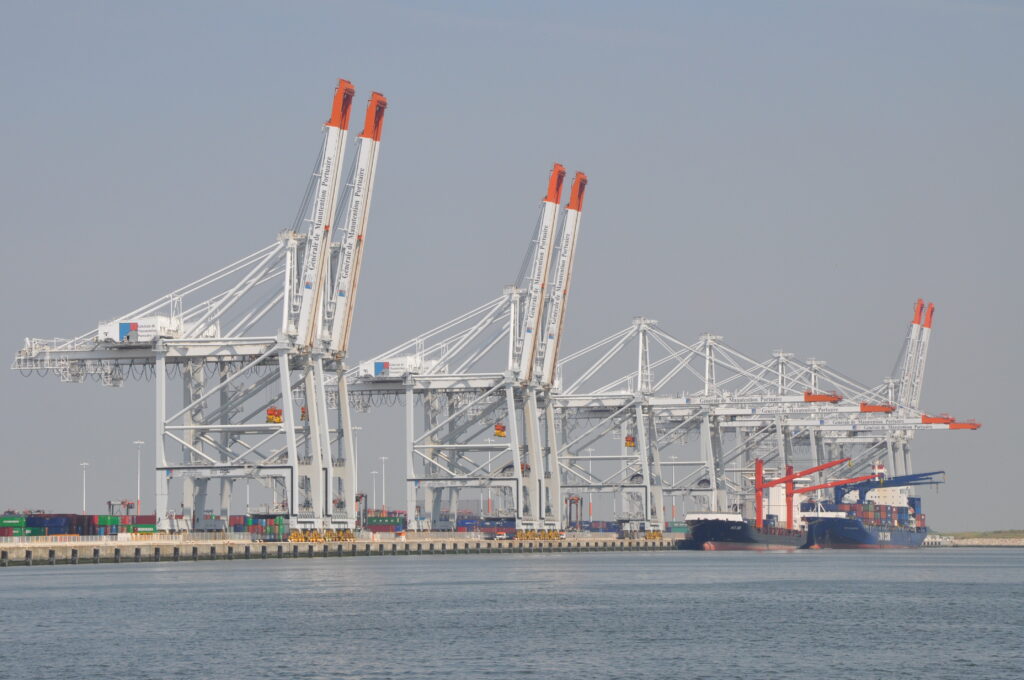
G7 ministers have until November 2026 to launch a new network of seaports to fight drug trafficking. Leaders set the deadline at the Évian summit in June, in a declaration also supported by Brazil, the Republic of Korea and Kenya. A second November deliverable, an action plan against criminal infiltration of public and private institutions, is due at the same time. For port operators, shipping lines, logistics firms, chemical producers and banks, the text points to closer work with law enforcement and new attention to security standards.
A G7+ Ports Network
The declaration calls maritime transport “the primary vector for global drug and precursor chemical trafficking.” Building on work under Canada’s 2025 presidency, leaders committed to create a G7+ Ports Network to Combat Drug Trafficking. It is meant to link G7 members with their partners’ main maritime ports, in coordination with the European Ports Alliance and the European Coalition Against Drugs.
According to the text, the network will coordinate, share information and apply best practices, possibly including joint field visits to port authorities and law enforcement agencies. It builds on the International Maritime Organization’s International Ship and Port Facility Security Code. Leaders also agreed to set up an inventory of G7 initiatives and best practices to counter drug and precursor chemical trafficking in ports.
Ministers were tasked to implement the network by November 2026, “with a particular focus on broadening cooperation with the private sector and enhancing port and shipping security standards.”
A second deadline on infiltration
The same declaration asks ministers to develop, also by November 2026, a comprehensive G7 action plan against the infiltration of legitimate public and private institutions by drug trafficking networks and organized criminal groups. Leaders described infiltration as “a central component” of the economic model used by transnational crime groups.
The declaration does not say which sectors the action plan will cover or what it will ask of companies. Its scope will become clear only when ministers publish it.
Following the money
Leaders committed to strengthen financial investigations to trace, freeze, seize and confiscate criminal proceeds and assets, including virtual assets. The text says the “follow-the-money approach must be systematically applied,” supported by information exchange among law enforcement, judicial authorities and financial intelligence units. This work is tied to Financial Action Task Force standards and the G7 Financial Crime Call to Action. Financial institutions and virtual asset service providers are the private actors most directly connected to that work.
The declaration also covers demand reduction, national drug observatories and early warning systems, and support for partners in production and transit regions. It welcomed a regional security conference in the Caribbean, held in Martinique.
What to watch
As of October 9, the French presidency’s G7 news page listed no update on the ports network or the action plan. Both deliverables are due before France’s presidency year ends. Companies with port, shipping or freight operations in G7 and partner countries will want to see how the network defines its private sector channel and which security standards it chooses to reinforce.







