





Group of Nations SUMMITSSolutions Through Inclusivityby Group of Nations

Publisher of the first-ever G7 Summit publication, Denver 1997

See where your company fits

A question for your company

Which analysis on this page could your company add a solution to?

Share your answer over a virtual coffee & a chat →
An Official Publication of America250. Declaring Freedom: the founders and the birth of a nation. Order your copy at shop.groupofnations.com An Official Publication of America250. Icons of the Open Road: Route 66 and landmarks from all 50 states. Order your copy at shop.groupofnations.com An Official Publication of America250. Gridiron Evolution: America’s game, from Canton to the world. Order your copy at shop.groupofnations.com An Official Publication of America250. To the Moon and Beyond: America’s space legacy. Order your copy at shop.groupofnations.com
Official America250 Commemorative Posters in Full Color, Old Style and Black & White, 18 x 24 in. Order at shop.groupofnations.com
With congratulations on America’s 250th Anniversary, from JMI-IBNF, PEACE and the Global Alliance CouncilAdvertisement
Group of Nations supports Birmingham Care Group as its charity of choice. Donate now at birminghamcaregroup.org

Analysis · Critical minerals · G7 deadlines

G7 minerals plan faces two year-end deadlines as export controls spread

Leaders at Évian told ministers to set new dependency and recycling goals by the end of 2026, while IEA data show refining concentration still rising.

November 10, 2026 · 3 min read

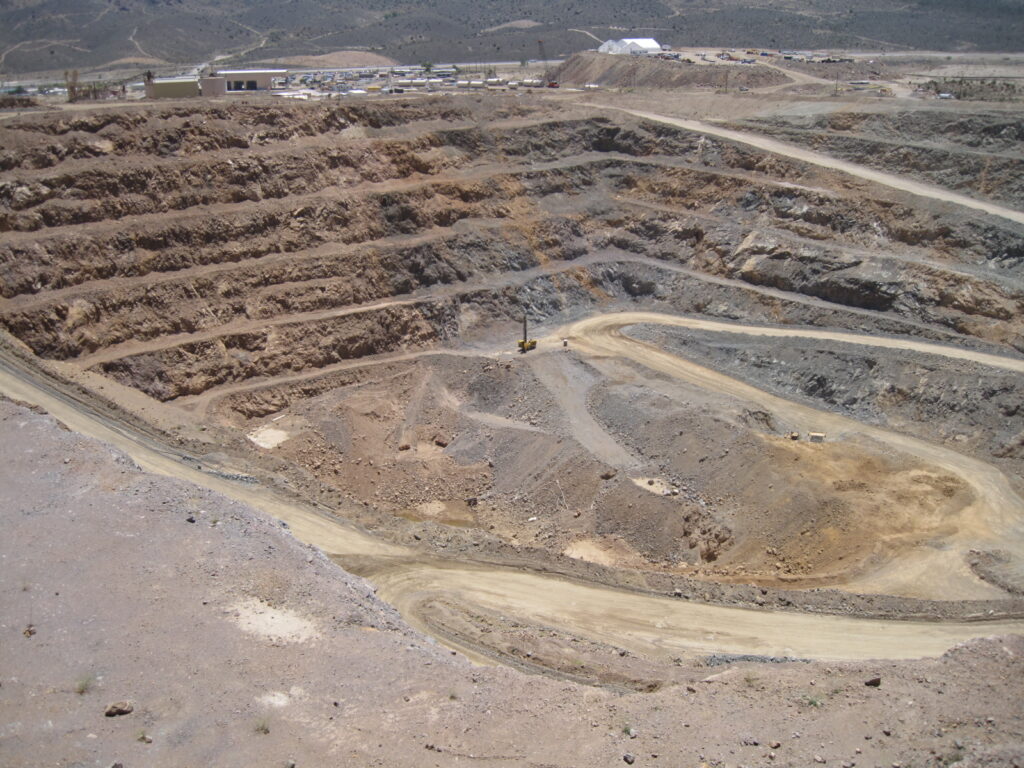
Open-pit Mountain Pass rare earth element mine in the California desert
Mountain Pass rare earth element mine, California, June 2018. Photo: Bradley Van Gosen, U.S. Geological Survey (public domain)

The G7 critical minerals plan has two open deadlines before the end of 2026. In their June declaration at Évian, leaders tasked ministers with setting a specific target for reducing dependence on a single outside supplier for critical minerals other than rare earths and permanent magnets. They also pledged to work toward recycling targets for selected minerals by year-end. We could not find either target published in official sources as of November 6.

The outcome matters to manufacturers, investors and suppliers. The targets would show where G7 governments intend to steer public finance, procurement and trade policy after the existing rare earth goal.

What leaders have already agreed

The one firm number covers rare earths and permanent magnets. Leaders aim to reduce dependence on a single supplier outside the G7 and partner countries to under 60 percent by 2030, with an ambition to reach 50 percent as soon as possible. Australia, a G7 partner country, supported the declaration.

The declaration cites 195 projects announced since the start of 2026, reaching 64 billion euros of investment across the value chain. It sets up a non-binding Critical Minerals Resilience and Production Alliance, open to like-minded partners with the approval of participating countries. It also commits members to a joint mechanism, built with the International Energy Agency, for sharing data and alerts on market stress.

Traceability starts with two pilots, lithium and nickel, with a goal of adding five minerals each year. Price floors, quotas and price-gap subsidies remain under discussion. Leaders said they would continue to explore those tools and weigh their effects on competitiveness, public finances and downstream industries.

What the IEA data show

The IEA Global Critical Minerals Outlook 2026, published in July, shows how far the starting point still is from diversified supply. Excluding rare earths, the average share of the top refining country rose to 72 percent in 2025 from 70 percent in 2023. Rare earths were the notable exception, with a modest decline in concentration after new projects in the United States and production increases in Malaysia.

Trade restrictions have also widened. The IEA reports that the number of mineral tariff codes under Chinese export controls has tripled since 2023. It also lists a cobalt export quota in the Democratic Republic of the Congo and restrictions in Zimbabwe and Mozambique.

Those measures have split prices across markets. The IEA says European prices for gallium, dysprosium and terbium are around five times Chinese domestic prices, and germanium is almost three times higher. Tungsten prices rose sixfold over 2025 and early 2026.

What to watch

The first signal will be whether ministers publish a target covering specific minerals or a single broad figure. The second will be whether recycling goals are stated as tonnage, share of consumption or capacity. The declaration says only that collective recycling capacity should produce a significant share of annual G7 consumption by the end of 2030.


Sources

Source: www.elysee.fr

Would you be against a virtual coffee & a chat? A cup of coffee framed by G7, G20, APEC and COP
Chris Atkins
Chris AtkinsPresident & Founder, Group of Nations

Would you be against a virtual coffee & a chat to see where your company fits?

Schedule your virtual coffee →

Click the image to order your virtual coffee & a chat. Pick a time that suits you; the video link comes with your calendar invitation.

More on Critical minerals

Critical minerals page →

Read by ministers and government officials, delegations, embassies, CEOs and NGOs

We explain what was decided. Your company can show business leaders, delegations and NGOs how it gets done.

Clients that have shared their solutions

SamsungMastercardDeutsche BankPfizerBMW
Would you be against a virtual coffee & a chat to see where your company fits?
Front cover: The Advocacy Advantage by Chris Atkins

Free book · by Chris Atkins

The Advocacy Advantage

How the world’s top executives shape global stories

We’ll email you the book. Your address stays with Group of Nations.

Summit alerts

Know what is being published, before it is published.

A short note ahead of each summit — the edition in production, the deadline for inclusion, and what the presidency has put on the agenda. No more than one a month.

We publish for governments and Fortune 500 companies. Your address is used for these alerts only, and never sold.





