








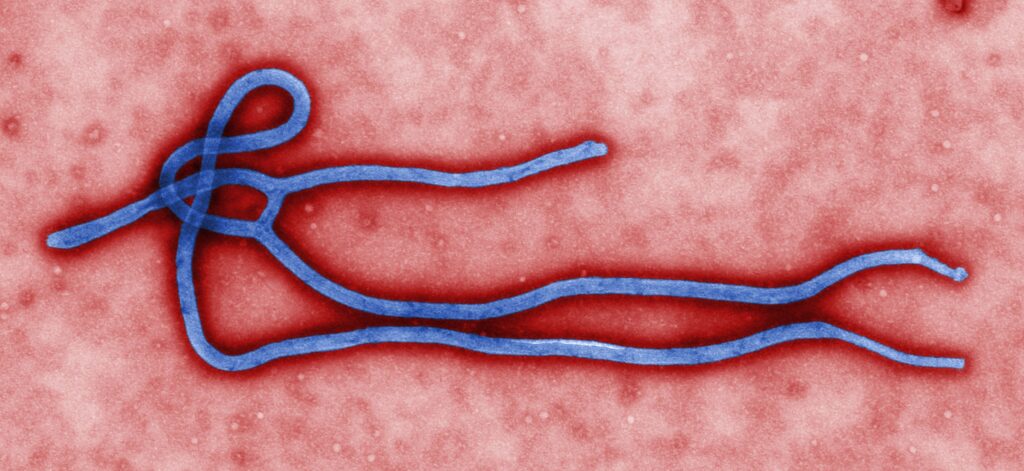
The United States has used its G20 presidency to convene a foreign ministerial on the Ebola outbreak in the Democratic Republic of the Congo (DRC). According to the chair’s statement issued by the State Department on September 30, 2026, G20 members and other donors announced more than $470 million in new commitments, bringing total global pledges to more than $2 billion since the outbreak began in May 2026.
Health is not one of the three themes on the U.S. presidency’s priorities page, which centers on regulatory burdens, energy, and AI and emerging technologies. The ministerial shows the G20 being used as a convening platform for a live crisis. For companies with staff, suppliers or operations in the region, and for developers of diagnostics and vaccines, the statement sets out where public money is going.
Who pledged what
The United States announced an additional $267 million in health and humanitarian assistance, bringing direct U.S. government assistance to $887 million. The State Department first announced the $267 million on September 23, on the margins of the UN General Assembly, and said it fulfills the U.S. commitment at the G7 Leaders’ Summit to provide up to an additional $500 million for the Ebola response.
Other commitments listed in the chair’s statement include $67.5 million (£50 million) from the United Kingdom, an additional $24.8 million from Germany, $18 million from the Republic of Korea, $16 million from France, $11.3 million from Italy, $10 million from the United Arab Emirates, an additional $5 million from Japan and $3.5 million from Australia. The World Bank announced $90 million: $80 million from its Crisis Response Window and $10 million from the Global Financing Facility.
The presidency invited other major health and humanitarian donors, including Poland, Ireland, the Netherlands, Norway, Singapore, Qatar and the UAE, along with the Africa CDC, OCHA, the Pandemic Fund, UNICEF and the World Bank.
Why this outbreak is harder
The chair’s statement says the outbreak is centered in an isolated, conflict-affected area, and that existing vaccines, diagnostics and therapies are not fully effective against the Bundibugyo strain. It cites the end of Uganda’s outbreak in August as evidence that the disease can be defeated.
The statement calls for scaling up contact tracing, protecting frontline responders, expanding bed capacity, deploying new diagnostics and investing in vaccine development. The new U.S. funding is directed to Ebola treatment units, safe and dignified burial teams, large-scale procurement of personal protective equipment, expanded surveillance, and contact tracing through local implementers.
What to watch
Burden sharing is a stated U.S. theme. In its September 23 announcement, the State Department said the United States is the largest health and humanitarian provider for this outbreak and added: “we call on capable nations to increase burden sharing.”
The next G20 foreign ministers’ meeting is scheduled for Atlanta on October 30 and 31, ahead of the Leaders’ Summit in Miami on December 14 and 15. Official documents do not yet indicate whether the Ebola response will feature in leaders’ outcomes.
Sources
- G20 Chair’s Statement: Ebola Ministerial on Accelerating Collective Action to Defeat Ebola, U.S. Department of State, September 30, 2026
- United States Pledges Additional Life-Saving Health Assistance in Response to Ebola Outbreak, U.S. Department of State, September 23, 2026
- U.S. G20 Priorities, U.S. G20 Presidency (g20.org)
- Events calendar, U.S. G20 Presidency (g20.org)







