








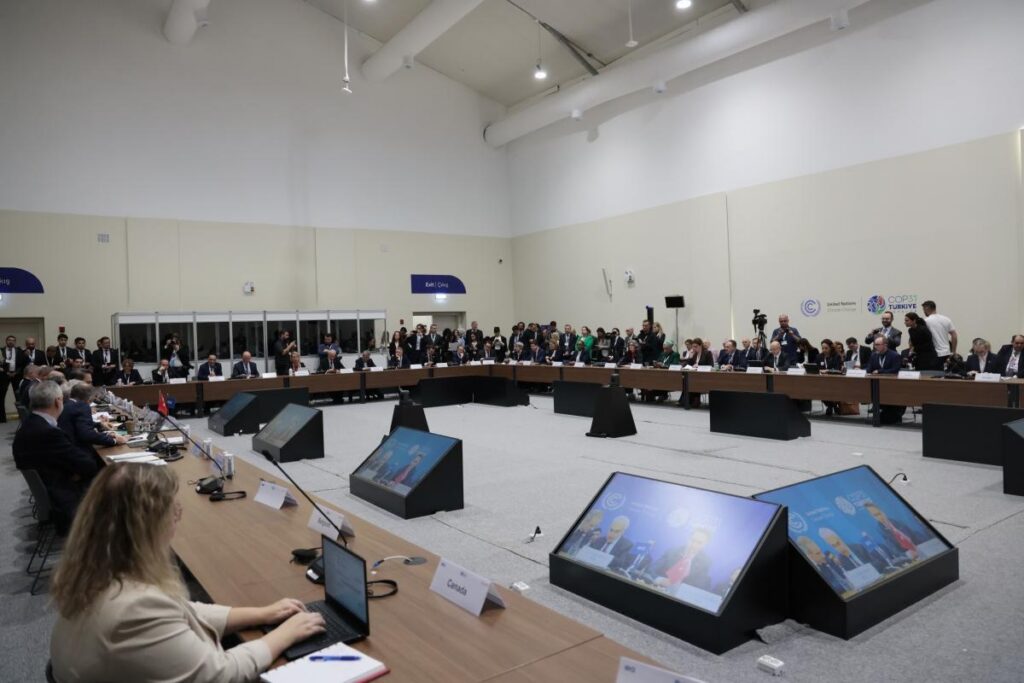
Alongside the negotiations on finance, adaptation and mitigation, the COP31 Presidency has opened consultations on strengthening the UNFCCC process itself. On November 13, co-facilitators Kushla Munro of the COP31 Presidency of Negotiations and Ayşin Turpancı of the COP31 Presidency invited further views from Parties, according to the Earth Negotiations Bulletin. The questions include how many agenda items the process carries, how often the COP meets and who can afford to take part. For companies that send delegations, host events or track decisions, the answers will shape where and when engagement pays off.
Ideas on the table
Some Parties supported clustering agenda items, while others said each item has its own mandate. The Independent Alliance of Latin America and the Caribbean (AILAC) supported reviewing agenda items and using existing draft rules of procedure that allow items to be amended or deleted. China suggested reviewing mandated events to improve their quality and efficiency.
On multi-year planning, the Arab Group suggested analyzing how biennial COPs would align with the timelines for nationally determined contributions and the global stocktake. AILAC said it was willing to discuss biennial COPs. The UK urged greater continuity in the Action Agenda, the track through which companies, cities and investors engage with the process.
Many Parties raised participation. Ideas included reviewing the Trust Fund for participation, addressing visa and travel cost barriers, and moving some non-negotiation events to the June sessions of the Subsidiary Bodies. A proposal for an external review drawing on lessons from other multilateral bodies drew questions about its cost and effectiveness. Russia, the Arab Group and China asked about the mandate for the consultations and whether they would lead to an outcome in the cover decision. Ms. Munro said all views would be heard before the co-facilitators propose a way forward.
The scale problem
The secretariat set out the background in its note on arrangements for intergovernmental meetings (FCCC/SBI/2026/4), prepared for the June session in Bonn. It points to the challenges posed by the increasing scale of UNFCCC conferences, including mandated events, and cites options such as keeping to agreed time limits for statements and convening the opening and closing plenaries of the governing bodies jointly.
The note also shows pressure on observer access. By the end of 2025, 4,081 observer organizations had been admitted, and about 1,250 applications were awaiting assessment as of March 2026. Observer participation is constrained by venue capacity and a quota of 2,000 participants. About 65 percent of observer organizations attend only one session.
The calendar ahead
Any reform would apply to a schedule that is already taking shape. Ethiopia will host COP32 from November 8 to 19, 2027. COP33 is set for November 6 to 17, 2028, with its President to come from the Asia-Pacific States; the secretariat note asks the regional groups to accelerate consultations on the host. The note also proposes session dates for 2032 and 2033 for adoption at COP31.
Whether the consultations produce language in the COP31 cover decision, or a mandate for further work, should become clearer before the conference closes on November 20.







