









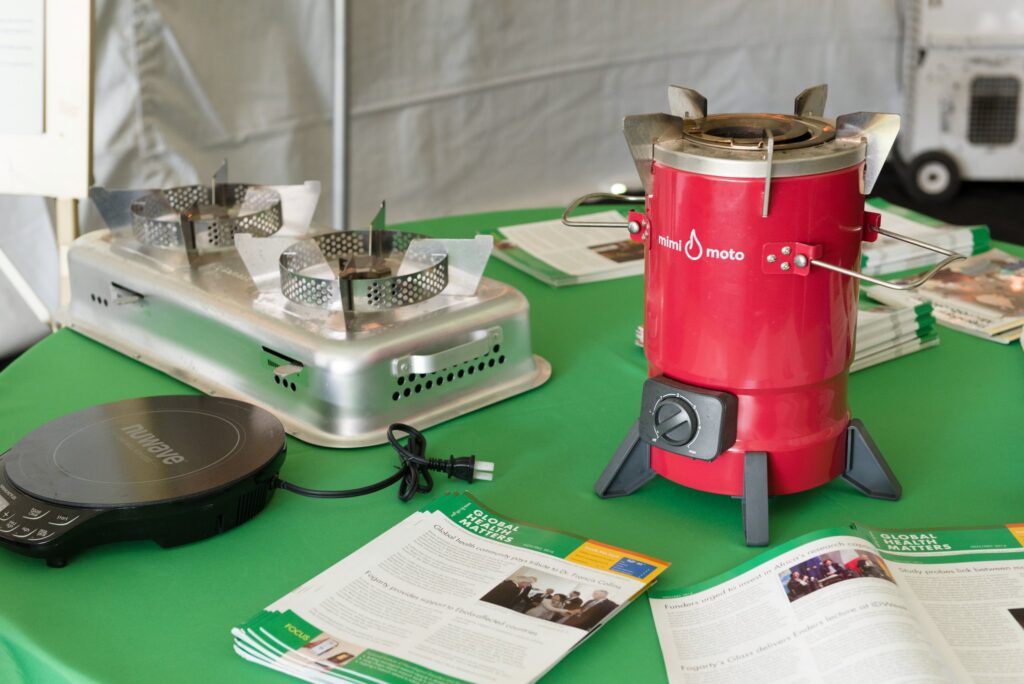
The B20 USA Leaders’ Statement asks G20 governments to commit to collectively mobilize $4 billion a year for clean cooking, through a mix of public money and new financing mechanisms. It sets 2040 as the date to unlock that annual sum.
The figure matches the International Energy Agency’s estimate of what closing the clean cooking gap would cost. The IEA says nearly 2 billion people worldwide still lack access to clean cooking, half of them in sub-Saharan Africa, and that the gap could be closed with an investment of about $4 billion a year.
For business, clean cooking is a market as well as a development goal. It involves LPG supply chains, electric appliances, distribution networks and consumer finance. The B20 frames it as part of energy access alongside electricity, with “food security, livelihoods, and economic development” as the stated aims.
Where the money stands
The IEA’s progress report, Clean Cooking in Africa 2026, finds that investment in sub-Saharan Africa’s clean cooking sector reached $770 million in 2024, up from $590 million in 2020. About 70% came from private capital and consumer spending. That is still well short of $4 billion a year.
At the IEA-hosted international summit on clean cooking in Africa in 2024, governments and companies made $2.2 billion in new commitments. The IEA reports that nearly $740 million of that had been disbursed by the end of May 2026, across almost 30 African countries. It says the full commitments are on track to be delivered by 2030.
Progress on access is real but slow relative to population growth. Nearly 12 million people in Africa gained access to clean cooking in 2024, up from about 4 million in 2010. Yet the number without access still rose by about 14 million because of population growth. The IEA says early data put 2025 on track for a record year.
What the B20 wants from the G20
The B20 places clean cooking within its energy abundance priority, led by its energy task force under Scott Strazik of GE Vernova. Its shared objective for that priority also includes scaling nuclear capacity to about 950 GW by 2050 and raising annual electricity generation investment in developing countries to $630 billion by 2035.
On clean cooking specifically, the statement says more than 2 billion people still rely on traditional solid fuels, “causing serious health impacts.” The IEA puts the toll from the traditional use of biomass for cooking at 2.5 million premature deaths a year. It also says households without access spend an average of four hours a day collecting fuel and cooking.
The B20 names what it calls the IEA Clean Cooking Alliance to provide coordination and accountability for the $4 billion goal.
The fuel question
LPG dominates current progress. The IEA says it accounts for more than 70% of people with clean cooking access in Africa and most new connections in 2024, with electric cooking second. That exposes clean cooking programs to global LPG markets, which the IEA notes were disrupted this year by the Strait of Hormuz closure.
For companies weighing this market, the main variables are whether G20 governments accept a collective financing goal, how public money is blended with private capital, and how fuel price shocks are handled.
Sources
- International Energy Agency, Clean Cooking in Africa 2026
- International Energy Agency, Clean Cooking in Africa 2026: Executive summary
- International Energy Agency, $740 million from first Clean Cooking Summit already deployed to projects across Africa
- B20 USA 2026 Leaders’ Statement, U.S. Chamber of Commerce







