








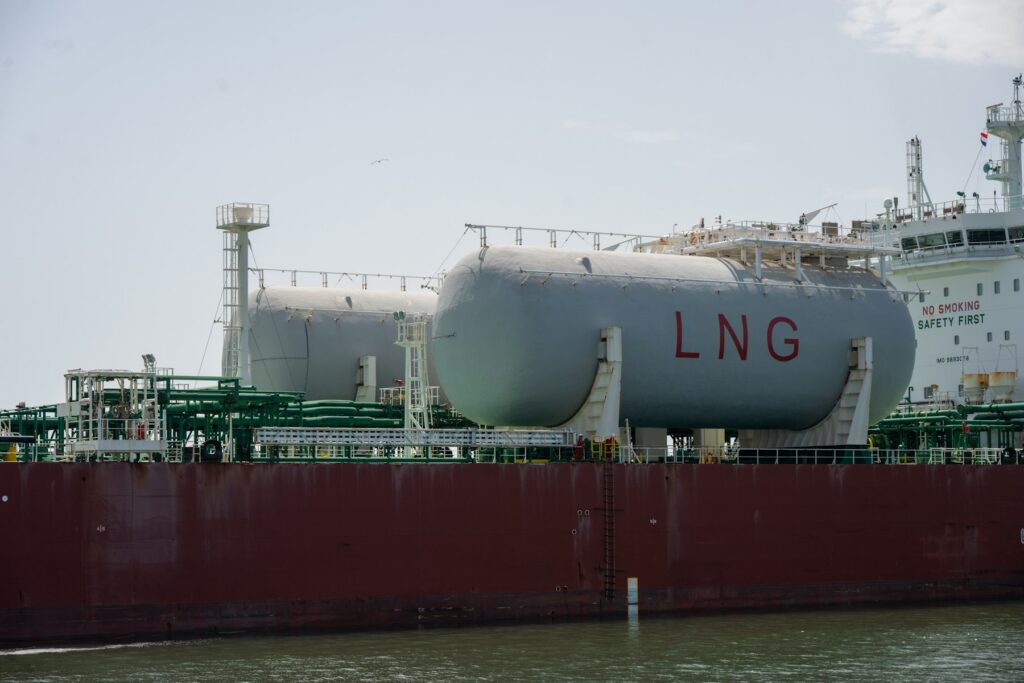
The B20 USA Leaders’ Statement asks G20 governments to work with the International Energy Agency (IEA) to explore a security framework for natural gas and liquefied natural gas (LNG). The proposal is part of a wider energy security package from the Energy Task Force, chaired by Scott Strazik, CEO and president of GE Vernova. Business leaders will take the statement to the B20 USA Summit in Washington on November 9–11, 2026.
For utilities, energy-intensive manufacturers and LNG buyers and sellers, the proposals touch supply risk, the cost of capital for cross-border projects and the cyber standards that infrastructure operators may be asked to meet.
A gas framework modeled on oil stocks
The task force’s first priority is titled “Strengthen global energy security through infrastructure and inputs.” It says the G20 “should work with the International Energy Agency (IEA) to explore a gas/LNG security framework” for net-importing countries. The reference point is the IEA oil system. Under the Agreement on an International Energy Program, each IEA member country must hold oil stocks equal to at least 90 days of its net oil imports.
The task force pairs the gas proposal with two financing asks. It wants eligibility criteria for power infrastructure finance to be technology-neutral, so that grid projects are judged on what they enable in the future energy mix. It also says the G20 “should update bilateral investment protection standards and taxation treaties,” including dispute resolution, to draw private capital into cross-border energy infrastructure.
Data and cyber standards
A second recommendation focuses on supply chain transparency for fuels, electricity flows, critical minerals and power equipment. The statement asks governments to harmonize reporting standards for critical fuels and biofuels, building on IEA and Joint Organisations Data Initiative (JODI) frameworks, with safeguards for commercially sensitive data. JODI publishes free monthly data on oil and gas production, consumption, stocks and trade.
On cybersecurity, the statement says G20 governments “should work with industry to establish common minimum cyber resilience standards” for the energy sector. It also calls for coordinated cross-border incident response.
The investment target
The task force’s shared objective is to mobilize about $3.4 trillion a year in global energy investment through 2035 and to secure diversified supply chains for essential energy inputs. The statement cites expected global investment in electricity supply and infrastructure of more than $1.6 trillion in 2026. Other objectives in the energy section include scaling nuclear capacity to about 950 gigawatts by 2050.
The B20 makes recommendations; G20 governments decide what to adopt. The gas proposal asks only that the G20 “explore” a framework with the IEA, not that it create stockholding obligations. Companies with exposure to LNG trade may want to watch whether the IEA or G20 energy officials take up the idea after the summit.







