






Group of Nations SUMMITSSolutions Through Inclusivityby Group of Nations

Publisher of the first-ever G7 Summit publication, Denver 1997

See where your company fits

A question for your company

Which analysis on this page could your company add a solution to?

Share your answer over a virtual coffee & a chat →
An Official Publication of America250. Declaring Freedom: the founders and the birth of a nation. Order your copy at shop.groupofnations.com An Official Publication of America250. Icons of the Open Road: Route 66 and landmarks from all 50 states. Order your copy at shop.groupofnations.com An Official Publication of America250. Gridiron Evolution: America’s game, from Canton to the world. Order your copy at shop.groupofnations.com An Official Publication of America250. To the Moon and Beyond: America’s space legacy. Order your copy at shop.groupofnations.com
Official America250 Commemorative Posters in Full Color, Old Style and Black & White, 18 x 24 in. Order at shop.groupofnations.com
With congratulations on America’s 250th Anniversary, from JMI-IBNF, PEACE and the Global Alliance CouncilAdvertisement
Group of Nations supports Birmingham Care Group as its charity of choice. Donate now at birminghamcaregroup.org Sea Menace, a feature documentary on sargassum. One fisherman. One bloom. One ocean. One world connected. Supported by Groupofnations.com. Donate now at gofundme.com/f/support-sea-menace

Analysis · America250 · Diplomacy at 250

The Model Treaty at 250: how commerce came first in U.S. diplomacy

As the State Department marks 250 years of American diplomacy, the template trade treaty Congress approved in September 1776 shows how the country’s first foreign negotiations were built on commercial terms.

October 21, 2026 · 3 min read

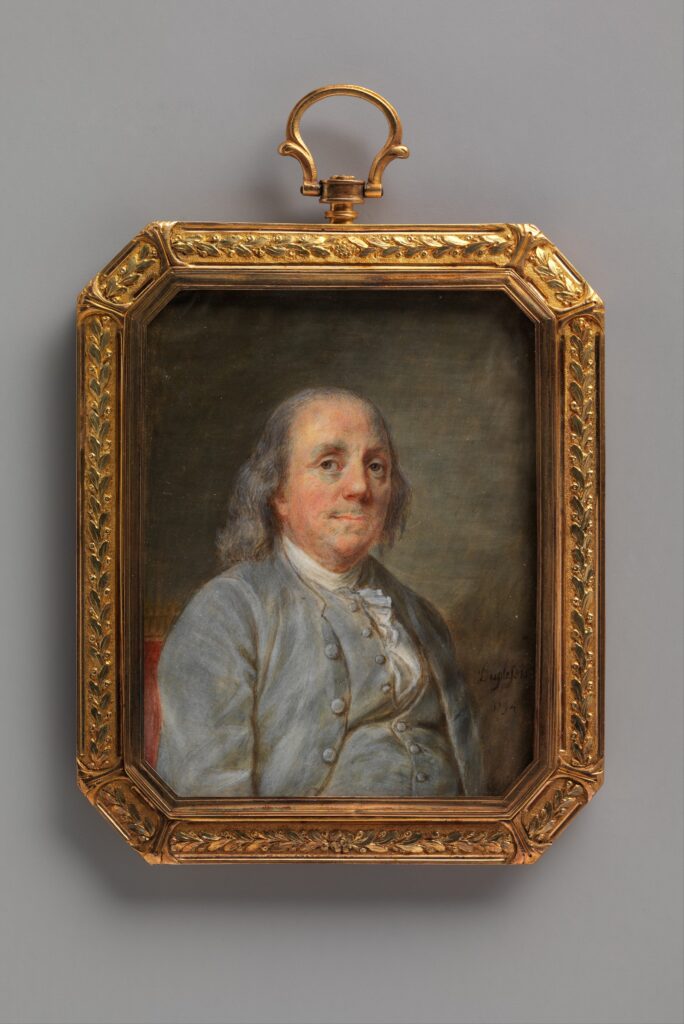
Portrait of Benjamin Franklin by Joseph-Siffred Duplessis
Benjamin Franklin, portrait by Joseph-Siffred Duplessis. The Metropolitan Museum of Art, via Wikimedia Commons (CC0)

The State Department is using the Semiquincentennial to mark 250 years of American diplomacy. This autumn brings the anniversary of the document that set the terms for the country’s first foreign negotiations. On September 17, 1776, the Continental Congress approved the Model Treaty, a template for commercial treaties with France and Spain.

For trade and public affairs teams, the anniversary is a reminder that the first U.S. foreign policy instrument was a trade text. It offered commercial terms in exchange for support, rather than proposing a military alliance.

What the Model Treaty proposed

According to the State Department’s Office of the Historian, John Adams sketched an early version in his diary in the spring of 1776. He presented a more formal draft to Congress on July 18, 1776, two weeks after independence was declared.

The template sought reciprocal trade terms, though not free trade. It made no mention of direct military assistance. Instead, it provided for the supply of weapons and other indirect help, alongside favorable commercial terms.

On September 24, 1776, Congress drafted instructions for commissioners to negotiate with France on that basis. If the more liberal trade clauses could not be secured, the commissioners were to seek a most-favored-nation clause. They were also to seek further military aid and to assure Spanish diplomats that the United States had no designs on Spanish territory. Congress appointed the commissioners the next day.

From template to treaty

France did not agree to a treaty until early 1778. The Treaty of Amity and Commerce concluded that year was based on the Model Treaty. It was signed at the same time as a separate Treaty of Alliance, which carried the military terms.

The final commercial treaty differed from the template in two notable ways. Each country granted the other most-favored-nation trading privileges, and each allowed the other to station consuls in its cities. The Office of the Historian notes that the Model Treaty also served as a template for later U.S. commercial treaties.

Benjamin Franklin served on the commission to France from 1776 to 1778. In 1779 he presented his credentials to the French court, becoming the first American minister received by a foreign government. His home in Passy, just outside Paris, became the center of American diplomacy in Europe.

Why it matters in 2026

The State Department’s Semiquincentennial page commemorates the years before independence as “a time when America’s diplomacy was born.” It highlights Franklin’s outreach to sympathizers in Britain and his search for assistance from France and Spain.

Several concepts in the 1776 and 1778 texts remain part of the vocabulary of trade negotiation: reciprocity, most-favored-nation treatment and consular access. The 250th anniversary of the 1778 treaties falls in early 2028, which extends the diplomatic strand of the commemoration well beyond the July 4 milestone. For companies with transatlantic operations, it is a natural hook for programming with French and other European partners over the next two years.


Sources

Source: history.state.gov

Would you be against a virtual coffee & a chat? A cup of coffee framed by G7, G20, APEC and COP
Chris Atkins
Chris AtkinsPresident & Founder, Group of Nations

Would you be against a virtual coffee & a chat to see where your company fits?

Schedule your virtual coffee →

Click the image to order your virtual coffee & a chat. Pick a time that suits you; the video link comes with your calendar invitation.

More on America250

America250 page →

Read by ministers and government officials, delegations, embassies, CEOs and NGOs

We explain what was decided. Your company can show business leaders, delegations and NGOs how it gets done.

Clients that have shared their solutions

SamsungMastercardDeutsche BankPfizerBMW
Would you be against a virtual coffee & a chat to see where your company fits?
Front cover: The Advocacy Advantage by Chris Atkins

Free book · by Chris Atkins

The Advocacy Advantage

How the world’s top executives shape global stories

We’ll email you the book. Your address stays with Group of Nations.

Summit alerts

Know what is being published, before it is published.

A short note ahead of each summit — the edition in production, the deadline for inclusion, and what the presidency has put on the agenda. No more than one a month.

We publish for governments and Fortune 500 companies. Your address is used for these alerts only, and never sold.





