







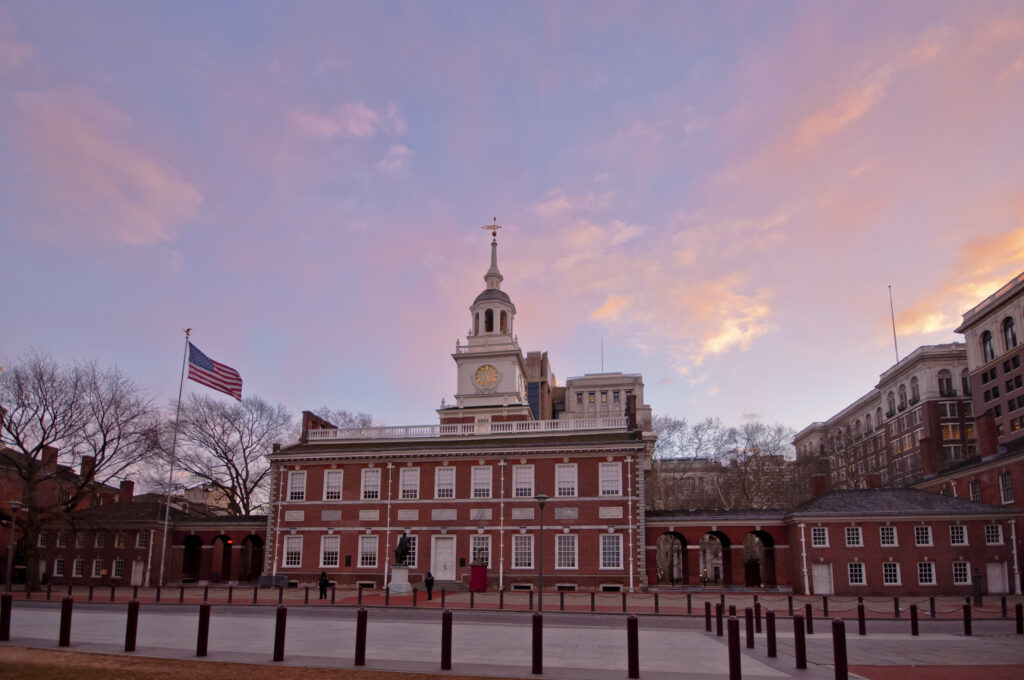
With the peak of the Semiquincentennial year behind it, Philadelphia is moving from projections to measurement. The city has hired Epsilon Economics to produce an independent study of the economic and fiscal impact of its 2026 major events. The result will be one of the more closely watched accounts of what a Semiquincentennial host city gained.
The question matters to business because sponsors, hotel owners, airlines and public agencies made commitments on the basis of forecasts. Philadelphia’s study will offer a check on those forecasts, and other host cities and states may face the same questions.
What the city commissioned
The city announced the selection on August 20, 2026, after a request for proposals run by the Office of the Director of Finance. The contract was expected to begin on or about August 24, with compensation not to exceed $75,000.
The study covers major events through July 31, 2026. The city named the FIFA World Cup 26, MLB All-Star Week, the One Philly Unity Concert, the 2026 New Year’s Eve celebration and America250 celebrations, along with other programming. It will examine visitor activity, direct and indirect impacts, state and local tax revenue, and how effects were distributed across industries and geography.
The final report is to set out methodology, data sources, assumptions and findings. The city’s release gives no publication date. Because the window closes on July 31, later Semiquincentennial activity would fall outside it.
The numbers it will be read against
Several estimates are already in circulation, and they measure different things. A study by Econsult Solutions for Visit Philadelphia projected $1.3 billion to $2.5 billion in net economic impact for the Greater Philadelphia region, above a typical 2026. It also projected 8,400 to 17,100 additional full-time-equivalent jobs, $40 million to $80 million in city tax revenue and $45 million to $90 million in state tax revenue. Those ranges rest on assumed spending increases of 10 percent or 20 percent.
For the World Cup alone, local organizers cite $770 million in economic impact, 6,615 jobs and $51 million in Pennsylvania tax revenue. The Economy League of Greater Philadelphia, a civic research group, describes that $770 million as gross statewide activity. Its own analysis points to net new local income of $30 million to $90 million. In August, The Philadelphia Inquirer reported that the group’s analysis was leaning toward the lower end of that range.
Why the method matters
The gap between these figures reflects definitions more than disagreement. Gross activity counts spending that passes through an economy. Net measures try to remove spending that would have occurred anyway and money that leaves the region. Geography also changes the result, since a statewide figure and a city figure answer different questions.
Readers of the final report should look first at those choices. The key points will be whether results are gross or net, what baseline is used, and how far the study separates the effect of each event. America250 programming shared a calendar with the World Cup and the All-Star Game, so attribution to the anniversary alone may be difficult.
Sources
- City of Philadelphia: Parker Administration selects Epsilon Economics to conduct economic impact study of 2026 major events, August 20, 2026
- FIFA World Cup 26 Philadelphia: Impact
- Econsult Solutions: Coalition 2026 economic impact study
- Econsult Solutions: Previewing the impact of 2026 sporting events in Philadelphia
- Economy League of Greater Philadelphia: Counting what stays
- The Philadelphia Inquirer: Was the World Cup good for Philly’s economy?







