








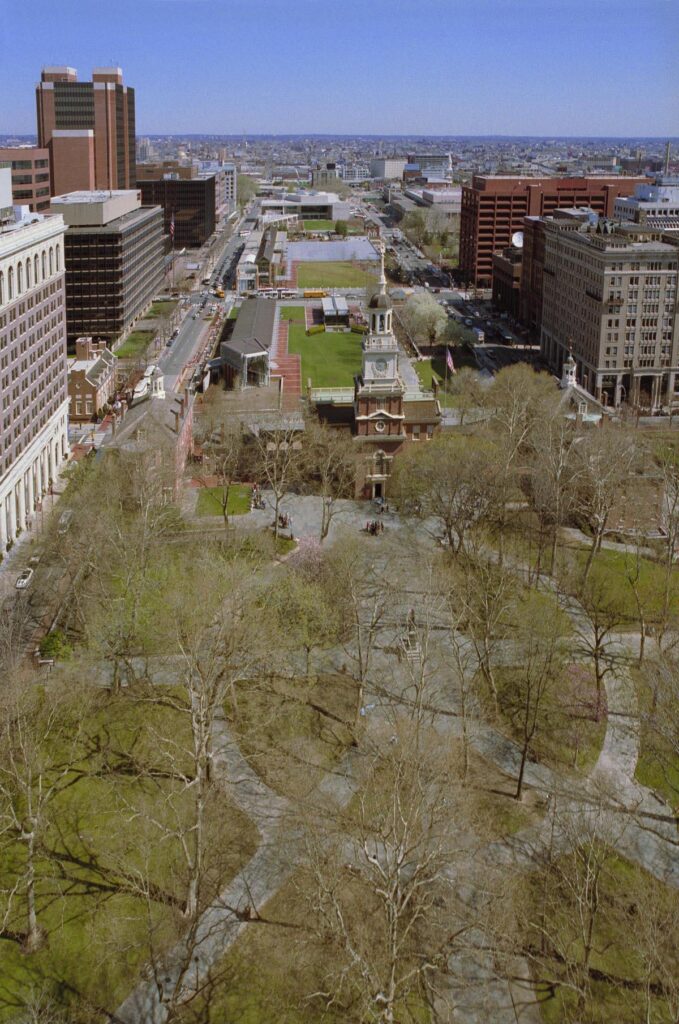
International arrivals to the United States were flat in July 2026, the month of the 250th anniversary of the Declaration of Independence. Data from the Commerce Department’s National Travel and Tourism Office (NTTO), posted this week, put July arrivals at 6,248,242, down 0.1 percent from July 2025.
For hotel, aviation, retail and destination companies that planned around the Semiquincentennial, the total hides a split. Visits from Canada and Mexico rose. Visits from overseas markets fell.
What the July numbers show
NTTO reports that overseas visitation fell 7.0 percent from a year earlier. Canadian visitation rose 7.6 percent, to 1,465,644. Mexican visitation rose 8.0 percent, to 1,696,679.
Mexico and Canada were the two largest source markets. They were followed by the United Kingdom (386,960 arrivals), India (182,146) and Japan (166,902). Together, the top five markets accounted for 62.4 percent of all international arrivals.
By purpose of trip, the leading overseas tourism markets were the United Kingdom, Brazil, India, Japan and France. The leading overseas business markets were India, the United Kingdom, Japan, Germany and South Korea. India led overseas business arrivals with 36,459, just ahead of the United Kingdom at 36,353.
Outbound travel moved the other way. U.S. citizen departures rose 2.3 percent, to 11,776,323, in July. Departures to Europe fell 1.2 percent, while Mexico remained the largest destination.
How July compares with the forecast
NTTO’s spring 2026 forecast projected 70.5 million international visitors in 2026, up 3.2 percent from 2025. It projected growth of 3.8 percent from Canada, 5.8 percent from Mexico and 1.6 percent from overseas markets.
The forecast pointed to the FIFA World Cup, co-hosted with Canada and Mexico, as a likely driver of visits. It did not cite the 250th anniversary. July’s overseas decline is well below the forecast’s annual pace for that segment, though a single month does not settle the full-year result.
What to watch for the rest of the commemoration
The Semiquincentennial does not end with July 4. The National Park Service says it is preparing for “increased use of key sites.” It is using Great American Outdoors Act funds at Revolutionary-era sites, including Saratoga Battlefield, Minute Man National Historical Park and the First Bank building in Independence National Historical Park. The agency also reports $30 million distributed through its Semiquincentennial Grant Program.
For companies tracking the anniversary’s commercial effect, the next indicators are NTTO’s August arrivals data and its monthly international visitor spending figures. Both will show whether the split between land-border and overseas markets held after the July 4 peak. They will also indicate whether the World Cup and the anniversary together lifted overseas demand over the summer as a whole, or whether July was typical of the year.







