









Colorado has named the first sites in a historic marker program that is designed to outlast its anniversary commission. On November 16, 2026, the America 250 – Colorado 150 Commission announced the first four markers awarded through its Historic Marker Program, “History Where It Happened.” The program marks both the nation’s Semiquincentennial and Colorado’s 150th year of statehood.
The business relevance lies in continuity. The commission concludes its work at the end of 2026. From January 2027, History Colorado, the state agency partner, will take over the program, including future application rounds, historical review and implementation, according to the commission’s release. Local governments, historical societies, Tribal representatives and other organizations can still apply.
The first four sites
The program plans up to 150 new roadside markers statewide. It has received 26 applications so far, and four were awarded in the first round:
The La Jara-Alamosa Buddhist Temple in Conejos County, which served Japanese American communities in the San Luis Valley from 1937 to 1993.
United Airlines Flight 629 in Firestone, Weld County. The aircraft was destroyed by a bomb on November 1, 1955, killing all 44 people aboard. The release notes that the tragedy prompted federal aviation security legislation. The marker will be placed within the debris field.
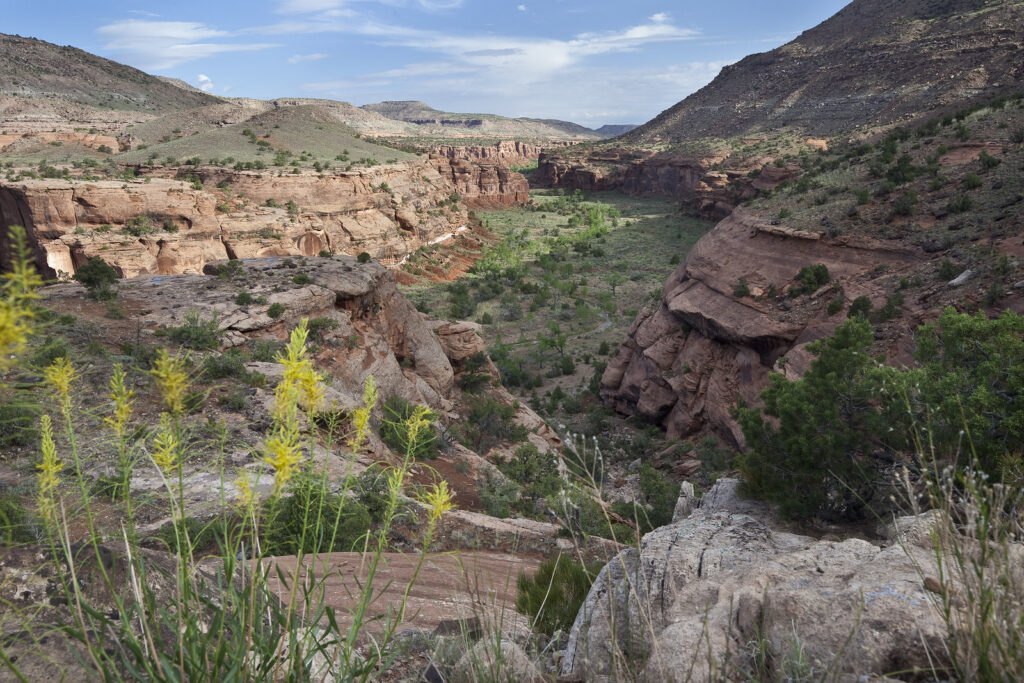
The Domínguez-Escalante Expedition in the west end of Montrose County. In August 1776, Franciscan friars Francisco Atanasio Domínguez and Silvestre Vélez de Escalante crossed what is now western Colorado while seeking a route to California.
The Bottoms in Denver’s Sun Valley neighborhood, which was devastated by the June 1965 South Platte River flood. That marker will sit on land managed by Denver Parks and Recreation.
Installation dates are being coordinated with local partners and have not yet been announced.
How the program is funded and run
The program was developed with History Colorado and is funded by the William G. Pomeroy Foundation, a private foundation based in Syracuse, New York. The foundation pays for fabrication and shipping of approved markers. Local organizations coordinate installation at their chosen sites.
Jason Hanson, a commissioner and chief creative officer at History Colorado, called the program “an important legacy of the Commission’s work,” in the commission’s release.
What to watch
Two application deadlines are already set. Proposals due January 15, 2027, are expected to lead to installations beginning in November 2027. Proposals due July 15, 2027, are expected to lead to installations beginning in May 2028.
For companies with operations or history in Colorado, the program offers a defined, community-led process for recognizing local history, with a timeline that runs well beyond the 2026 anniversary year. The Flight 629 marker also shows that the program covers twentieth-century events, not only the colonial and statehood eras.
Details and guidelines are available through the commission’s website, Am250CO150.org.







