








Madrid has made the United States the guest country of its 2026 Hispanidad festival, which runs from October 2 to 12. The regional government links the choice to the 250th anniversary of American independence. For companies with U.S.–Spain exposure, it is one of the most visible examples of the Semiquincentennial being marked outside the United States, and a reminder that the anniversary now has an international calendar of its own.
What the festival includes
The Community of Madrid organizes Hispanidad, which it describes as its sixth edition. The organizer lists more than 200 activities across the region, including music, dance, theater, conferences, film, food and exhibitions, with all featured events free. The program connects more than 20 countries on both sides of the Atlantic.
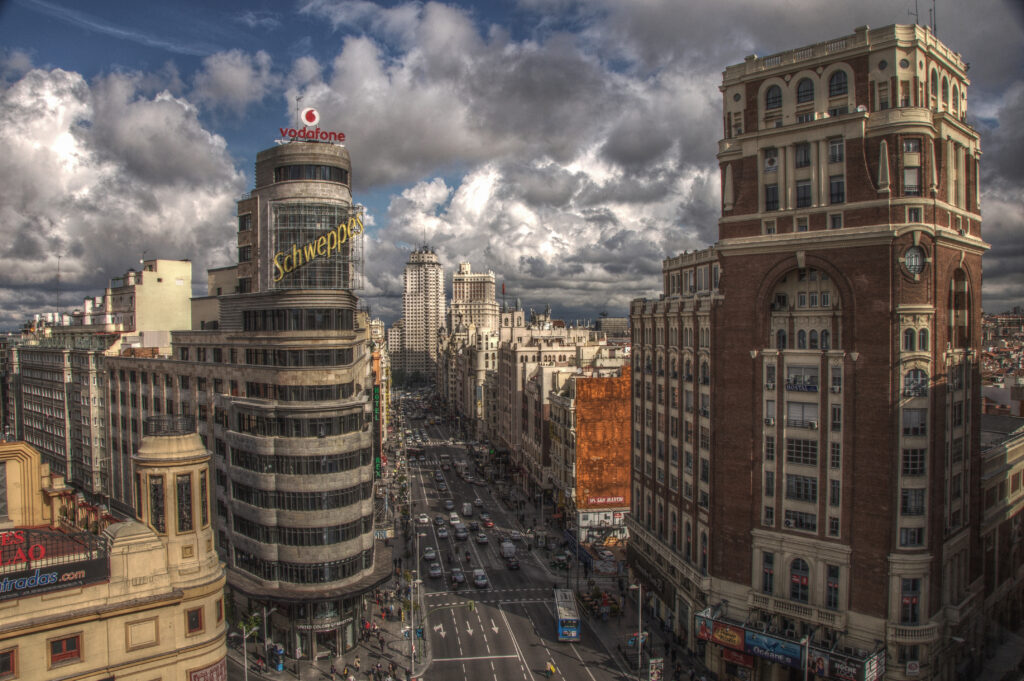
The Hispanidad parade ran along the Gran Vía on October 4. Free concerts at the Plaza de España continue through October 12. Collaborating institutions named by the organizer include the City of Madrid, Casa de América, the Real Academia Española, the Real Academia de Bellas Artes de San Fernando and the Fundación Mapfre.
Madrid’s official tourism listing names several U.S.-linked items in the program. They include the World Street Brass Band of New Orleans, a show titled “From Broadway to Gran Vía,” a conference on Spanish art collecting, and projects titled “1776 We The Hispanics” and “We the Hispanos. Spain, Roots of the United States.” The Real Academia de Bellas Artes de San Fernando is also showing an exhibition on the American imprint in Madrid, centered on a portrait of George Washington.
How the guest-country role came about
Isabel Díaz Ayuso, President of the Community of Madrid, announced the U.S. role in June 2025 during an institutional trip to the United States. The regional government said at the time that the same trip launched an international campaign promoting Madrid as a region open to the world. The two previous guest countries were the Dominican Republic and Mexico.
The tourism listing reports that the 2025 edition drew more than 900,000 people. No 2026 attendance figure has been published.
Why it matters to business
The festival places the Semiquincentennial inside a large public program run by a European regional government, with cultural and corporate institutions as collaborators. For public affairs teams, it shows that foreign hosts are setting their own terms for the anniversary, framed here around shared language and history rather than U.S.-led messaging.
Companies planning international activity around the 250th can expect similar host-led programming through the rest of the commemoration period. Partnership roles in these events are set by the host institutions, so engagement runs through local organizers, not through U.S. bodies.
The festival closes on October 12.







