









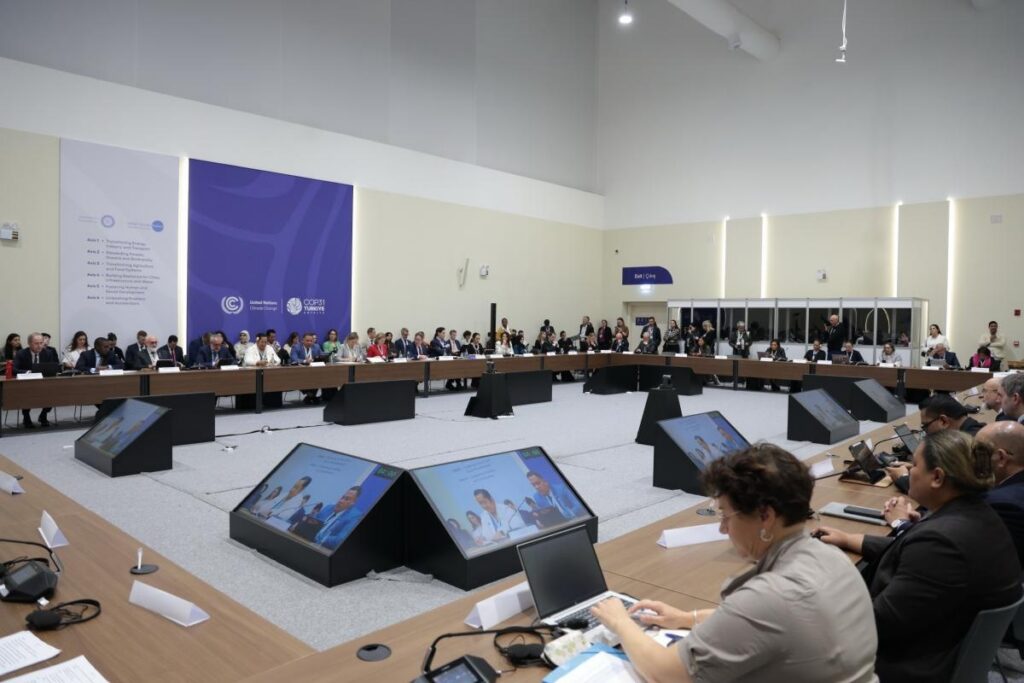
COP31 in Antalya closed on November 22, 2026, without its cover decision, but Parties did adopt guidance on both tracks of the Paris Agreement’s carbon markets. For companies that buy credits, develop projects or trade under national emissions schemes, the decisions show the system moving from rule-making into operation. They also leave open questions on funding and procedure.
Article 6.4: a working mechanism under review
The Paris Agreement Crediting Mechanism, set up under Article 6.4, now issues credits. Its Supervisory Body approved the first issuance in February 2026, for a clean cooking program in Myanmar with participants authorized by the Republic of Korea. UN Climate Change said the credited reductions were roughly 40 percent lower than the same activity would have earned under the Clean Development Mechanism, because of more conservative calculations.
In October, the Supervisory Body adopted two household cooking methodologies, adding to earlier ones on landfill gas, nitrous oxide from nitric acid production and grid-connected renewable power. In its annual report to the CMA at COP31, the Body cited four approved methodologies and the first issued credits.
The CMA decision (FCCC/PA/CMA/2026/L.4) asks the Supervisory Body to make its work prioritization more transparent and to keep standards focused on environmental integrity. It also asks the Body to keep reviewing whether a time limit is needed between credit issuance and a host country’s statement of authorization, and to report to CMA 9 in 2027. Least developed countries told negotiators that some methodologies, including clean cooking, are hard for developers to apply.
Article 6.2: a registry goes live, funding stays open
Under Article 6.2, countries trade internationally transferred mitigation outcomes (ITMOs) bilaterally. On November 16, the UNFCCC secretariat demonstrated the first version of its international registry for countries that lack their own. It can record activities, issue mitigation outcomes linked to authorizations, and track transfers, use and cancellation. Onboarding is staged, with a workshop expected in early 2027. Later releases are to connect with national registries and the Article 6.4 registry.
The CMA’s guidance decision (FCCC/PA/CMA/2026/L.5) asks the secretariat to finalize review practice guidance for technical expert reviews and to report on the Article 6 code of practice. It notes a shortfall in resources for that work.
Who pays for the infrastructure was not settled. Parties weighed core budget funding, usage-based fees and user fees. Several developing-country groups opposed fees on developing countries, while the European Union backed usage-based fees for the international registry. The decision (FCCC/PA/CMA/2026/L.6) sends the text to SBI 66 and asks the secretariat for a technical paper on the effects of each option.
What business should watch
Three items will shape the market in 2027: the methodology pipeline, which determines which project types can earn Article 6.4 credits; the authorization time-limit review, which bears on how quickly credits reach buyers; and the funding outcome, which could add fees to transactions. The CMA also asked the Supervisory Body and the secretariat to keep exploring funding to keep the mechanism running.
Sources
- UN Climate Change: UN carbon market approves first-ever issuance of credits under the Paris Agreement (February 26, 2026)
- UN Climate Change: Clean cooking projects gain access to UN carbon market (October 9, 2026)
- UN Climate Change: COP31 sees launch of first version of Article 6.2 international registry (November 17, 2026)
- UN Climate Change: Paris Agreement Crediting Mechanism news
- IISD Earth Negotiations Bulletin: Summary of the Antalya Climate Change Conference







