









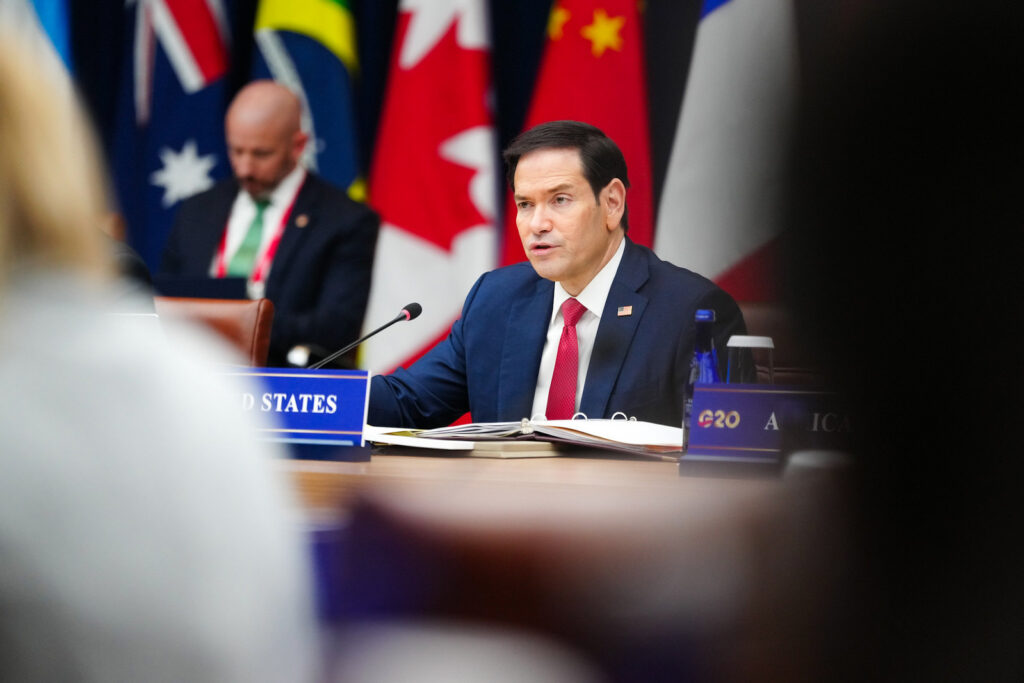
The U.S. G20 presidency has made “Removing Regulatory Burdens” the first of its three priority themes for the Miami leaders’ summit on December 14 and 15. The IMF’s 2026 G20 Report on Strong, Sustainable, Balanced, and Inclusive Growth gives that agenda its most detailed economic backdrop. For companies, the report is notable because it puts numbers on the cost of regulatory compliance while also warning that reforms need careful design.
A weak medium-term outlook
The report, dated August 2026 and based on information available as of July 10, says G20 medium-term growth prospects, “at just 3 percent,” remain close to their weakest since the G20’s growth framework was launched in 2009. It finds that income convergence with the United States has stalled or reversed for most G20 economies. At the recent pace, it says, convergence for the average G20 emerging market could take more than 50 years.
On imbalances, the report says global current account balances widened for the second year in a row in 2025, driven mainly by China, and that the U.S. deficit “remains by far the largest.” It adds that “elevated debt and deteriorating debt dynamics continue to threaten the sustainability of growth.”
The regulatory numbers
The report says that “market-liberalizing and deregulatory reforms can boost investment and growth where existing regulatory burdens are relatively high.” It cites estimates that between 3.2 and 4 percent of labor in the United States, Australia and Europe goes to compliance tasks, a direct drag on output of around 1 to 2 percent of GDP.
It gives two other examples. Eliminating non-geographic internal trade barriers in Canada could increase real GDP by nearly 7 percent in the long run. Removing cross-border financial frictions in the European Union could raise long-run GDP by about 3 percent.
The report also adds a caution: policies “should nonetheless be designed well to ensure outcomes on the possibilities frontier rather than within it.” Its headline recommendation is broader than deregulation. It says “fiscal consolidation and structural reforms remain a priority” and lists fiscal frameworks, business regulation and labor market institutions as reform priorities across much of the G20.
How it fits the Miami agenda
The presidency’s finance track lists “pro-growth economic policies supported by deregulation” and “regulatory modernization and innovation” among its goals, alongside work on global imbalances, debt transparency, digital assets, cross-border payments and financial literacy.
The IMF report is a staff document. It states that it does not necessarily reflect the views of the IMF Executive Board or of G20 members. Sherpas meet in Miami from December 10 to 12, and any leaders’ text on regulation will show how far members accept the presidency’s framing.







