








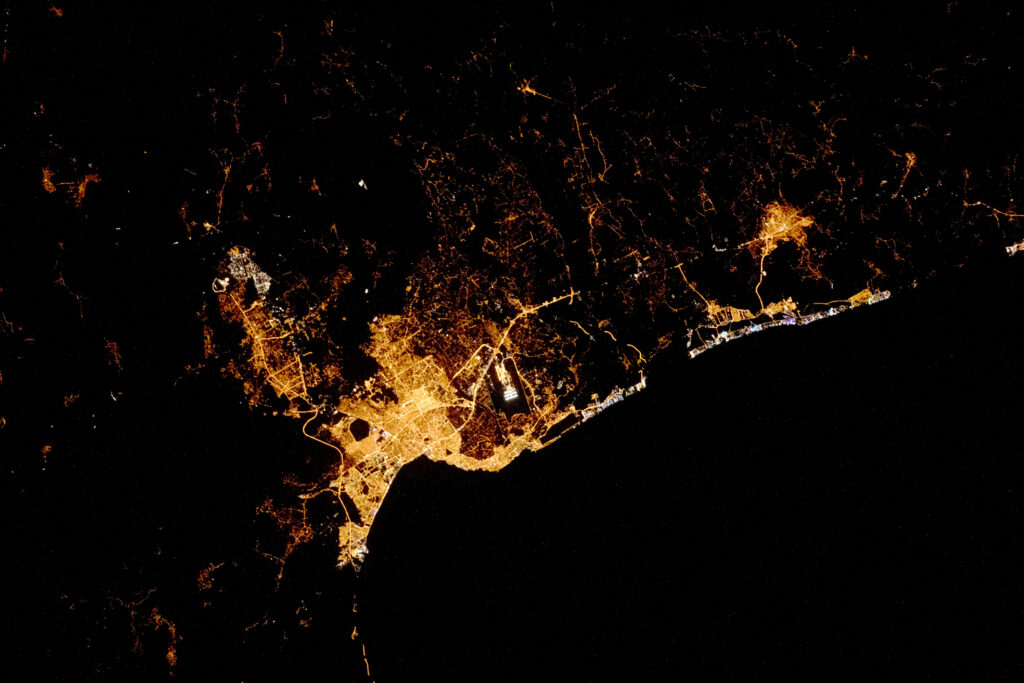
Heads of state and government opened the high-level segment of COP31 in Antalya, Türkiye, on November 11. The message from the UN side was less about temperature targets than about economic exposure. UN Climate Change Executive Secretary Simon Stiell told leaders that “the political costs of fossil fuel dependency are unforgiving” and that climate action “can help relieve the pressure.”
For business, the framing matters. It signals that the UN system wants Antalya’s outcomes judged on energy costs, supply chain resilience and access to finance, not only on new pledges. The conference runs from November 9 to 20, with Türkiye’s Murat Kurum as COP31 President and Australia’s Chris Bowen as President of Negotiations.
Climate policy as an inflation and security argument
Stiell said that “chaos in global energy markets and climate disasters are supercharging inflation,” hitting government budgets and household bills. He argued that clean energy means secure energy, and that building resilience to disasters “strengthens the global supply chains on which every economy depends.”
He set out three practical priorities for the conference: electrifying economies, tripling finance for adaptation, and improving access to finance “without reopening previous agreements.” He asked leaders to tell their ministers that they “cannot leave Antalya without a strong negotiated outcome,” alongside results on the Global Climate Action Agenda, the track that brings companies, cities and investors into the process.
Guterres proposes a Climate Justice Compact
UN Secretary-General António Guterres used his address to the Leaders’ Summit to propose a new Climate Justice Compact. He described four pillars: a just transition away from fossil fuels, protecting people through adaptation, finance that is adequate and affordable, and cooperation over fragmentation.
He cited benchmarks from the UNEP Emissions Gap report: global renewable capacity at least tripling from 2025 levels by 2035, and unabated coal power falling by at least 75 percent. He said global emissions must fall around 6 percent every year, while current national plans deliver “at best one-third of that.”
On finance, he called on developed countries to lead in delivering at least $300 billion a year by 2035 and to set out plans to at least triple adaptation finance. He said multilateral development banks must go beyond their Baku commitment of $120 billion a year by 2030. He also urged governments to tax fossil fuel windfall profits, noting that the Loss and Damage Fund has received around $600 million. Guterres told leaders that he will no longer be Secretary-General starting next year.
What to watch in week two
The gap Guterres described is consistent with the UNFCCC’s own NDC synthesis, published October 27. It estimates that current pledges would cut global emissions by around 6 percent below 2019 levels by 2035, or around 9 percent with full implementation of all pledges.
Negotiators have until November 20 to turn this into decisions. For companies, the items to track are decision language on electrification and grids, the goal of tripling adaptation finance, and how development bank and private finance are expected to close the gap. Leaders’ speeches do not bind negotiators, but they set the political terms for the second week.
Sources
- UNFCCC: Simon Stiell’s remarks to the High-Level Segment at COP31, November 11, 2026
- UNFCCC: Transcript of UN Secretary-General António Guterres’s remarks to the COP31 Leaders’ Summit, November 11, 2026
- UNFCCC: NDC Synthesis, BTR Synthesis and NAP Progress reports, October 27, 2026
- UNFCCC: UN Climate Change Conference, Antalya, November 2026







