







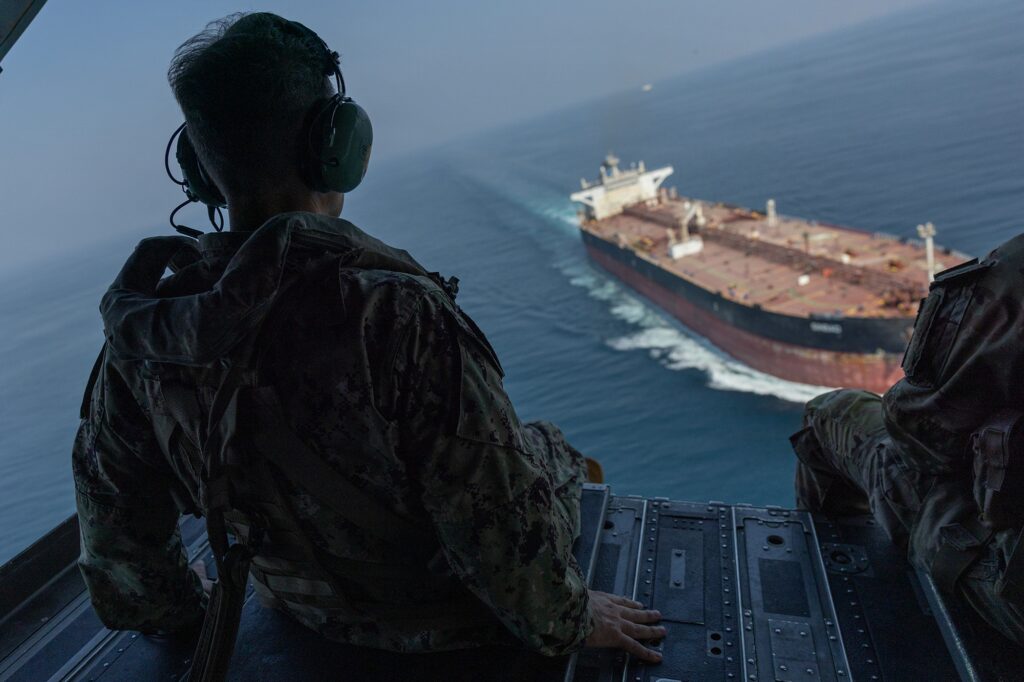
Shipping routes are a central item as G7 foreign ministers meet in Paris on November 9 and 10, 2026. Germany’s Federal Foreign Office, in a note published on the opening day, named the Strait of Hormuz “the central issue” for the security of trade and shipping routes. It also listed the Red Sea and Russia’s shadow fleet among the subjects for discussion.
For energy traders, shipowners, insurers and manufacturers, these routes drive fuel prices, freight rates and delivery times. Germany’s note warns that escalation in the region “could have significant consequences for the international energy supply, transport costs and the stability of the global economy.”
What is new this week
France’s published priorities for the meeting, released on November 6, put crisis resolution first. They include stabilizing the Middle East and “diversifying and securing energy supplies.” The German note, published on November 9, goes further on shipping. It names the Strait of Hormuz as one of the most important routes for the global energy trade and places the security situation in the Red Sea “in this context.”
The same note says sanctions on Russia remain “an important instrument” and that “a particular focus is being placed on constraining Russia’s shadow fleet.” It describes the fleet as a network of ships that Russia uses to circumvent sanctions and keep exporting oil. France invited the foreign ministers of Brazil, Egypt, the Republic of Korea, Saudi Arabia and Ukraine to the meeting. Germany’s note says the presence of Egypt and Saudi Arabia creates an opportunity for dialogue with regional players.
What the G7 has already said
The Paris talks build on two recent G7 texts. On September 25, 2026, G7 foreign ministers issued a statement on the Bab al-Mandab Strait. They called on the Houthis to cease attacks against civilian shipping and stressed the need to prevent “lasting disruptions to global supply chains, especially with regards to flows of energy, fertilizer and food.”
On October 2, 2026, G7 leaders issued a statement on energy security and market stability. They called “for the immediate and full restoration of navigational rights and principles in the Strait of Hormuz.” The same statement set out a coordinated 100 million barrel stock release through the International Energy Agency and a commitment to refrain from export restrictions on energy between G7 countries.
What to watch
France has not published a draft outcome text for the Paris meeting. Companies exposed to Gulf and Red Sea routes should watch for three signals: any new G7 language on navigational rights in Hormuz and Bab al-Mandab, any coordinated step on enforcement against the shadow fleet, and any reference to further energy market measures. Each would feed into shipping insurance, charter rates and fuel planning for the first months of 2027.
Sources
- German Federal Foreign Office: Overcoming global challenges with strong partners: G7 Foreign Ministers meet in Paris (November 9, 2026)
- French Ministry for Europe and Foreign Affairs: Priorities of the G7 Foreign Ministers’ Meeting in Paris
- G7 Évian 2026: G7 statement on Bab al-Mandab and navigational rights and freedoms (September 25, 2026)
- G7 Évian 2026: G7 Leaders’ statement on global energy security and market stability (October 2, 2026)







