





Group of Nations SUMMITSSolutions Through Inclusivityby Group of Nations

Publisher of the first-ever G7 Summit publication, Denver 1997

See where your company fits

A question for your company

Which analysis on this page could your company add a solution to?

Share your answer over a virtual coffee & a chat →
An Official Publication of America250. Declaring Freedom: the founders and the birth of a nation. Order your copy at shop.groupofnations.com An Official Publication of America250. Icons of the Open Road: Route 66 and landmarks from all 50 states. Order your copy at shop.groupofnations.com An Official Publication of America250. Gridiron Evolution: America’s game, from Canton to the world. Order your copy at shop.groupofnations.com An Official Publication of America250. To the Moon and Beyond: America’s space legacy. Order your copy at shop.groupofnations.com
Official America250 Commemorative Posters in Full Color, Old Style and Black & White, 18 x 24 in. Order at shop.groupofnations.com
With congratulations on America’s 250th Anniversary, from JMI-IBNF, PEACE and the Global Alliance CouncilAdvertisement
Group of Nations supports Birmingham Care Group as its charity of choice. Donate now at birminghamcaregroup.org

Analysis · APEC · Food loss and waste

APEC review finds per-person food waste rising despite wider reduction goals

A review published by the APEC Secretariat finds average per-capita food waste up 16 percent from 2019 to 2022 and calls for better data and cold-chain investment.

November 10, 2026 · 2 min read

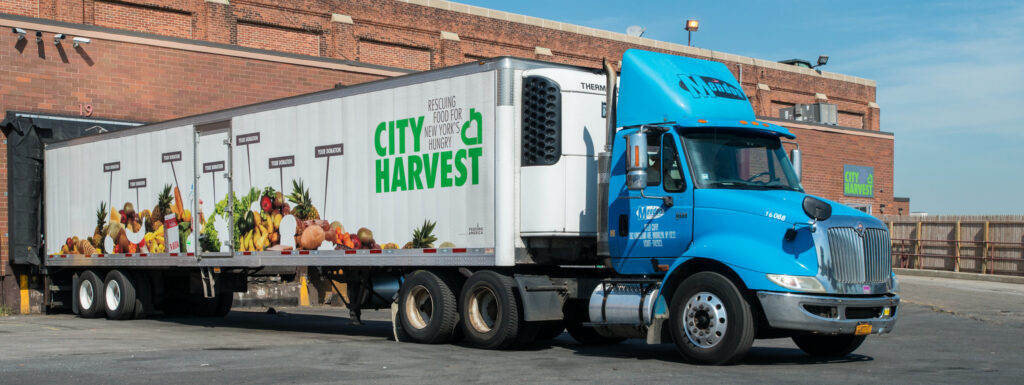
A refrigerated food rescue truck at a facility in Long Island City, New York
Photo: USDA, Lance Cheung (public domain)

A new APEC review of food loss and waste finds that the region is making policy progress but is still generating more waste per person. The 2025 Progress Review on Food Loss and Waste Reduction in the APEC region, published by the APEC Secretariat in October 2026, reports that average per-capita food waste rose from 127 kilograms in 2019 to 146 kilograms in 2022, an increase of 16 percent.

The findings matter to food manufacturers, retailers, logistics providers and packaging companies. The review points to measurement, cold chains and partnerships with business as the areas where economies need to do more.

What the review measured

The study was carried out under APEC’s Agricultural Technical Cooperation Working Group, with Chinese Taipei leading the work. The per-capita food waste figures exclude Chinese Taipei.

According to the review, 14 APEC economies have food loss and waste reduction goals aligned with Sustainable Development Goal target 12.3. That target calls for halving per-capita food waste at the retail and consumer levels and reducing losses along production and supply chains by 2030.

The household share of food waste fell from 59 percent to 52 percent over 2019 to 2022. That suggests a growing share of waste is occurring outside homes.

Using estimates for 19 economies, the review finds that food loss and waste across the food supply chain grew 9.6 percent from 2015 to 2022, or about 1.32 percent a year. In 2022, consumption accounted for 32 to 33 percent of the total and production for 25 to 27 percent. By commodity, vegetables made up the largest share at 27 percent, followed by cereals at 25 percent.

Where the review says work is needed

The review’s summary says “Political commitment has expanded, measurement capacity is improving, and practical actions are becoming increasingly comprehensive.” It adds that “progress remains uneven.”

It calls for stronger harmonized measurement, better food loss data, wider use of digital innovation, more investment in post-harvest and cold-chain infrastructure, and deeper public-private partnerships.

What it means for business

Several of these recommendations depend on private investment and private data. Cold-chain capacity, digital tracking along supply chains and shared measurement methods all involve companies as well as governments.

Uneven measurement also affects corporate reporting. Firms that report food waste across several APEC economies face different national baselines and methods. Harmonized measurement, if economies adopt it, would make those figures easier to compare.

The review is a technical report, not a ministerial decision. It gives officials a common evidence base as APEC continues its food security work after this year’s ministerial meetings.


Sources

Source: www.apec.org

Would you be against a virtual coffee & a chat? A cup of coffee framed by G7, G20, APEC and COP
Chris Atkins
Chris AtkinsPresident & Founder, Group of Nations

Would you be against a virtual coffee & a chat to see where your company fits?

Schedule your virtual coffee →

Click the image to order your virtual coffee & a chat. Pick a time that suits you; the video link comes with your calendar invitation.

More on APEC

APEC page →

Read by ministers and government officials, delegations, embassies, CEOs and NGOs

We explain what was decided. Your company can show business leaders, delegations and NGOs how it gets done.

Clients that have shared their solutions

SamsungMastercardDeutsche BankPfizerBMW
Would you be against a virtual coffee & a chat to see where your company fits?
Front cover: The Advocacy Advantage by Chris Atkins

Free book · by Chris Atkins

The Advocacy Advantage

How the world’s top executives shape global stories

We’ll email you the book. Your address stays with Group of Nations.

Summit alerts

Know what is being published, before it is published.

A short note ahead of each summit — the edition in production, the deadline for inclusion, and what the presidency has put on the agenda. No more than one a month.

We publish for governments and Fortune 500 companies. Your address is used for these alerts only, and never sold.





